The Last Five Minutes: How the End of a Meal Decides the Review
Guests forgive a slow starter. They don't forgive waiting twenty minutes to pay. Here's why the end of the meal carries more weight than the middle — and how to fix yours.
The Last Five Minutes: How the End of a Meal Decides the Review
A table has a lovely evening. The food lands well, the service is warm, they order dessert, they’re relaxed. Then they want to leave — and nothing happens. They catch nobody’s eye. They wait. They put their coats on to make it obvious. Eleven minutes later the bill arrives, then another wait for the card machine.
They still liked the food. But the story they tell tomorrow starts with “the food was great, but we sat there forever trying to pay.”
That’s not unfair, and it’s not unusual. How an experience ends carries far more weight in memory than any middle stretch of it. People compress a whole evening into a handful of moments, and the final one is almost always in the set. Which means the last five minutes of a meal — a window most restaurants staff and design for the least — is doing an outsized share of the work on your reviews and your repeat business.
Why the ending punches above its weight
Three things stack up at once.
Recency. The last thing that happened is the freshest and does the most work when someone summarises the night, writes a review, or answers “how was it?”
Intent. Guests at the end are done. They have somewhere to be, a babysitter, a film, a train. Waiting when you’re finished feels twice as long as waiting when you’re enjoying yourself. Ten minutes at the start of a meal is anticipation; ten minutes at the end is being held hostage.
Money. The end is when they pay. Any friction there gets attached to the price. A muddled bill, a wrong item, a slow terminal — all of it lands right on the moment they’re deciding whether that was worth it.
Where endings actually go wrong
The bill takes forever. The single most common complaint in the whole category. The guest has to signal, wait, be forgotten, signal again. Meanwhile the server has genuinely been busy elsewhere — this is a systems failure, not laziness.
They have to ask twice. Once for the bill, again for the card machine. Two waits instead of one, both of them at the exact moment patience has run out.
The bill is wrong or confusing. An item they didn’t have, an unexplained charge, a service charge nobody mentioned. Even when it’s fixed cheerfully, it introduces doubt right at the end.
Splitting is a whole production. Four people want to pay separately and it becomes a five-minute negotiation with pen and paper while everyone waits.
Nobody says goodbye. The table pays and walks out past staff who don’t look up. You greeted them warmly two hours ago; the exit gets nothing.
They get rushed. The other failure mode. Plates cleared aggressively, the bill dropped unasked, chairs stacked nearby, lights up, staff visibly waiting. Nothing says “you’re a task we’d like to finish” more clearly.
The fix is mostly timing and permission
Very little of this needs money. It needs a decision about when things happen and permission for staff to act.
Read the signals and act on them. Napkin on the plate, phone put away, coats picked up, chairs pushed back, that scan around the room for a staff member — your team should be trained to treat any of those as the cue to move, without waiting to be asked.
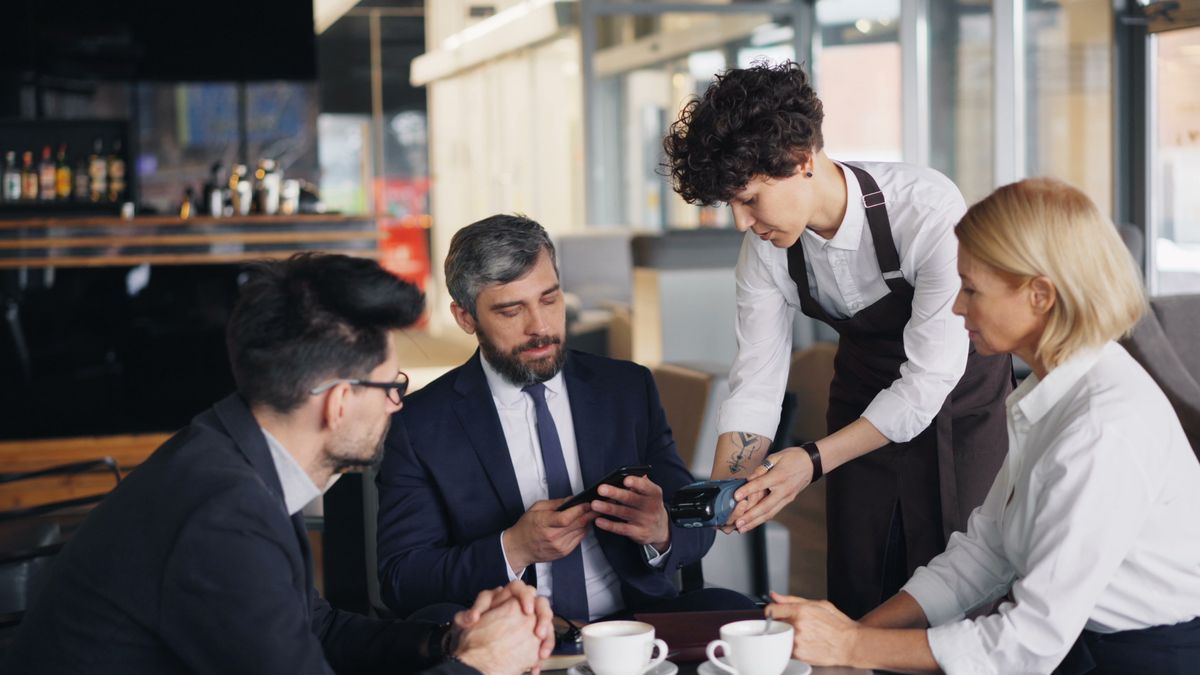
Bring the payment method with the bill. If you take card payments at the table, the terminal comes at the same time as the bill. One trip, one wait. This is the single highest-impact change most restaurants can make in a day.
Offer to split before you print. Ask when you take the plates: “one bill or separate?” Sorting it in advance turns a five-minute problem into a five-second question.
Make the check-back count. One well-timed pass a few minutes after the mains land catches problems while they’re still fixable. A complaint recovered properly at that point still becomes a good review; the same complaint discovered afterwards online does not.
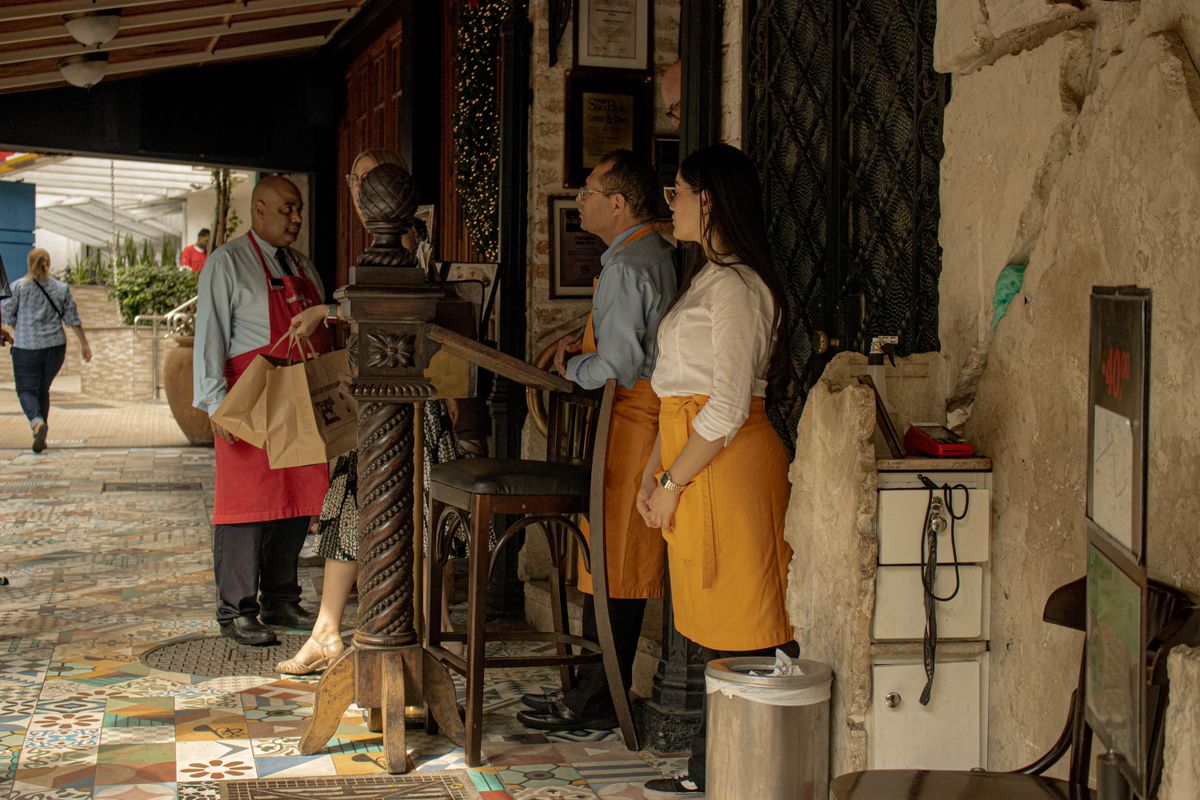
Say goodbye like you meant the hello. Someone should acknowledge every departing table — by name if you know it, with eye contact if you don’t. It costs nothing and it’s the last thing they take with them. The first impression gets all the attention, but the last one gets remembered.
Never rush a lingering table visibly. If you genuinely need it back, be direct and generous about it, not passive-aggressive with the lights and the stacking.
Some endings are worth more than a clean exit
Once the friction is gone, the end of the meal becomes an opportunity rather than a risk.
A small unexpected gesture at the close — a piece of chocolate with the bill, a taste of something on the house, a coffee for someone who’s clearly had a long day — costs very little and lands at exactly the moment memory is being set. That’s why it works better than a discount, which just changes the number.
It’s also the natural moment to invite them back. Not a hard sell; a sentence. “We do a set lunch Thursdays if you’re ever nearby.” “Next month’s menu changes — worth coming back for the new dishes.” People are most receptive to that immediately after a good experience, and it’s a large part of how first-timers become regulars.
And if you’re going to ask for a review, this is the window — while they’re happy and the meal is fresh, not three days later by email. A genuine “if you enjoyed it, a Google review really helps us” from the person who served them works far better than any automated request, and it’s the cheapest way to collect more reviews.
Take the friction out of paying entirely
Worth being honest about where the technology sits: most of the “waiting to pay” problem is structural, not attitudinal. If the only way to settle up is to catch a specific busy person’s attention and have them walk to a terminal and back, you’ve built a bottleneck into the last five minutes of every meal.
Anything that lets guests pay when they’re ready — a terminal that comes with the bill, paying at the counter, paying from their own phone — removes the bottleneck instead of asking your team to out-hustle it. Restaurants that make this change tend to notice two things: fewer end-of-meal complaints, and slightly faster table turns without anyone feeling hurried.
Let guests pay without hunting for a server
Lekro’s digital menu and ordering let guests order and pay from their own phone, so the end of the meal stops being a bottleneck. Start free.
Audit your own ending tonight
Time it. From the moment a table looks ready to leave, how long until the bill is in front of them? How long until they’ve paid? Does anyone say goodbye? Do it for ten tables and you’ll have a number — and it’ll probably be worse than you’d guess, because owners rarely watch this part; they’re usually dealing with the tables still eating.
You spend enormous effort on the food and the welcome. The last five minutes are where a lot of that either sticks or leaks away. Fix the ending and you’re not making the meal better — you’re making sure people remember how good it already was.
Tags