Restaurant Upselling Without the Ick: Raise the Average Order and the Experience
Done wrong, upselling annoys people. Done right, it makes the meal better and quietly lifts your average order value. Here's how to train suggestive selling that guests actually thank you for.
Restaurant Upselling Without the Ick: Raise the Average Order and the Experience
The word “upselling” makes a lot of good owners wince, and for a fair reason. We’ve all been on the receiving end of the bad version — the server who robotically pushes the most expensive wine, the “do you want to make it large for just a bit more” that feels like a shakedown. Nobody wants their restaurant to feel like that.
But here’s the reframe that changes everything: the best upselling isn’t selling at all. It’s hospitality. It’s a knowledgeable person helping a guest have a better meal than they would have ordered on their own. The guest ends up happier, the check ends up bigger, and nobody feels squeezed. That’s not a trick — it’s the difference between a good server and an order-taker. Get it right and you lift your average order value by a real margin without a single guest feeling the ick.
Why average order value is the easiest growth there is
Most restaurants chase growth by getting more customers through the door — which is expensive, slow, and hard. Raising your average order value is the growth lever hiding in plain sight, because it costs you almost nothing. The customer is already sitting there. They already chose you, they’re already hungry, they’re already going to pay. Adding a well-placed drink, starter, or dessert to that visit is pure, low-effort margin.
The numbers add up faster than people expect. A single extra $6 item on even a fraction of your tables, every service, compounds into serious money over a month — money that drops almost straight to the bottom line, because you’re not paying to acquire a new customer to get it. This is why upselling is worth taking seriously: it’s the cheapest sales you’ll ever make.
The mindset that makes it work
Everything good about upselling flows from one shift: stop trying to sell more and start trying to help more. A recommendation only lands when it’s genuinely in the guest’s interest.
That means specific and enthusiastic beats generic and pushy every time. “Can I get you anything else?” gets a reflexive “no thanks.” “Our short rib tonight is unbelievable — it’s my favourite thing we make” gets a “ooh, okay.” The second one works because it sounds like a friend tipping you off, not a business trying to pad the bill. Train your team to recommend things they actually love, describe them vividly, and read the table — because the goal is a better experience, and a bad-timed push does the opposite.
The moves your staff can use tonight
Suggestive selling is a skill, and it’s teachable. A few reliable patterns:
- Suggest the pairing, not the upgrade. “That burger’s amazing with a side of the truffle fries” helps the meal. “Want to upgrade your fries?” helps your margin and nobody else’s. Guests feel the difference instantly.
- Guide the undecided. When someone’s dithering over the menu, that’s not a delay — it’s an invitation. A confident “if it’s your first time, get the lamb” is a gift, and it usually points at exactly what you want to sell.
- Anchor with the good stuff. When you mention the premium option first — the aged steak, the special — it reframes everything after it and gives people permission to treat themselves.
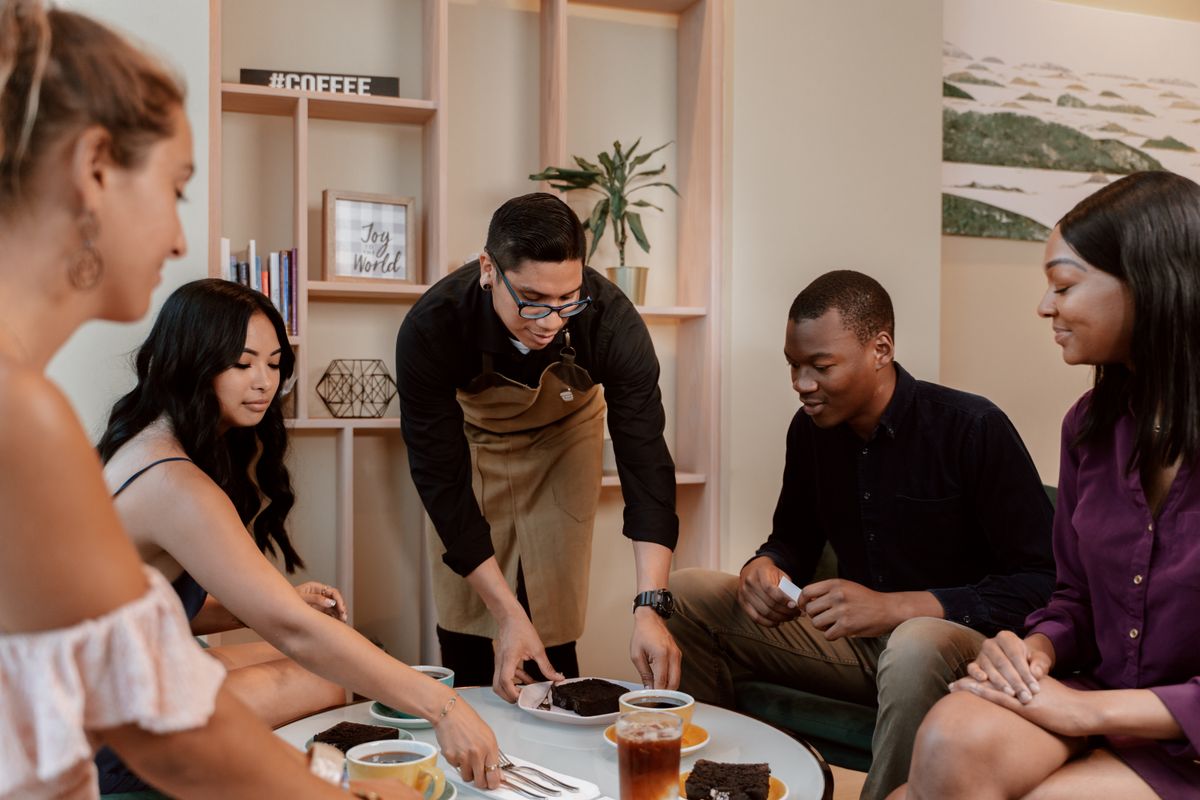
- Never skip the dessert-and-coffee moment. Plenty of tables would happily have dessert but won’t ask. A warm “should I tempt you with the dessert menu?” or bringing it to the table converts a lot of “we’re fine, thanks” into a shared tiramisu and two coffees.
- Time it right. A drink and a starter when they sit down. Sides and pairings with the mains. Dessert and coffee at the natural lull after. Push at the wrong moment and it grates; offer at the right one and it feels like good service.
Let the menu do the upselling too
Your staff aren’t your only salespeople — and on a digital or online-ordering menu, they’re not even in the room. This is where a lot of quiet average-order-value growth lives, because software can suggest tirelessly and never has an off night.
Build the upsell into the ordering itself. Combos and set menus nudge people toward a fuller order while feeling like a deal. A well-placed “add a drink?” or “people also added garlic bread” at checkout is one of the highest-converting moments there is — a small, one-tap suggestion right before payment consistently lifts the total. And smart menu placement does silent work: put your high-margin, high-appeal items where eyes land first, and more people order them without anyone saying a word. The best part is it scales — every single order gets the nudge, whether it’s a busy Saturday or a quiet online lunch.
Turn every order into a slightly bigger one
Lekro lets you build combos, add-ons, and one-tap upsells right into your digital menu and online ordering — so your average order value grows automatically. Start free.
Upselling gets a bad name because most people only notice the clumsy version. The good version is invisible — it just feels like a great server and a well-built menu helping you enjoy your meal more. Train your team to recommend what they love, build the gentle nudges into your menu, and watch your average order value rise on the back of guests leaving happier, not lighter. That’s the only kind of upselling worth doing.
Tags