
Menu Engineering: How to Design a Menu That Sells Your Best Dishes
Your menu is your hardest-working salesperson. Learn the psychology and layout tricks of menu engineering — how to arrange, describe, and price your dishes so guests order what's most profitable, without feeling sold to.
Menu Engineering: How to Design a Menu That Sells Your Best Dishes
Here’s something most restaurant owners never fully appreciate: your menu is the single most-read piece of marketing you will ever produce. Every guest studies it, usually for a couple of focused minutes, right at the moment they’re deciding how much money to spend with you. Nothing else you make — no ad, no post, no flyer — gets that kind of undivided attention.
And yet most menus are designed by accident. Dishes get added in the order they were invented. Prices line up in a tidy column. The layout is whatever fit on the page at the print shop. That’s a huge missed opportunity, because a menu built on purpose can quietly steer guests toward the dishes that taste best and make you the most money — without a single pushy word from your staff.
That deliberate craft is called menu engineering. Here’s how it works.
First, know which dishes are which
Menu engineering starts with two numbers for every item: how popular it is (how often it sells) and how profitable it is (what’s left after the cost of ingredients). Plot every dish against those two, and it falls into one of four buckets:
- Stars — popular and profitable. Your heroes. Protect and promote them.
- Plowhorses — popular but low-profit. People love them, but they barely earn. Can you tweak the recipe or portion to improve the margin without anyone noticing?
- Puzzles — high-profit but nobody orders them. The opportunity. Better placement, a better name, or a photo can wake these up.
- Dogs — unpopular and unprofitable. Usually candidates to cut. Every item you drop makes the rest of the menu easier to read.
You can’t do any of this by gut feeling alone. This is exactly where a digital menu earns its keep — it shows you what people actually tap, view, and order, so you know which dish is a secret Puzzle and which is a Dog dressed up as a favourite.
The eye doesn’t read a menu — it scans it
Guests don’t read your menu top to bottom like a book. They scan it in bursts, and their attention lands unevenly. A few reliable principles:
- The top of a category gets seen most. The first two items in any section get disproportionate attention. Put a Star or a Puzzle there — never a Dog.
- Boxes and lines create stops. Draw a subtle box around one dish and the eye snaps to it. Use this sparingly — box one thing per section, and make it something you want to sell.
- Too many choices freeze people. When a section has fifteen options, guests get overwhelmed and default to the safe, familiar (often low-margin) choice. Aim for roughly five to seven items per category. A shorter menu almost always sells better than a longer one.
Words sell — so write them like you mean it
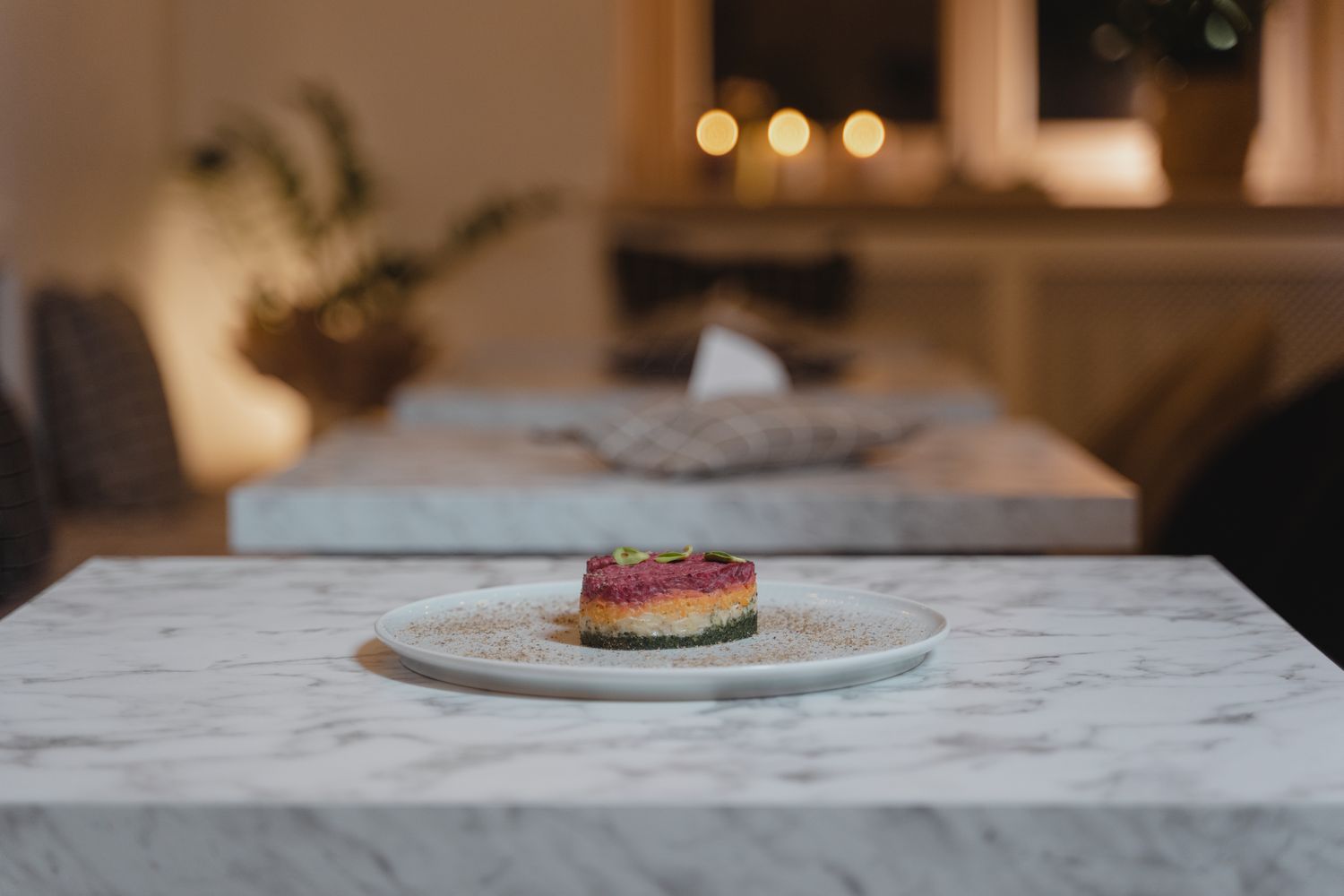
“Grilled chicken sandwich” is a description. “Char-grilled free-range chicken, smoked paprika aioli, on toasted sourdough” is a sales pitch. The second one isn’t fancier food — it’s the same sandwich described with care, and it will outsell the first every time.
A few rules that consistently work:
- Name the origin or the method. “Slow-braised,” “house-made,” “locally sourced,” “wood-fired.” Sensory and provenance words make food feel more valuable — and justify the price.
- Keep it honest. Never oversell. If the photo and the description promise more than the plate delivers, you win the order but lose the review.
- Give your Stars a little more room. A slightly longer, more loving description signals “this is the one to get.”
Price like a psychologist, not an accountant
How you present a price matters almost as much as the number itself:
- Drop the currency symbols and the trailing zeros. “12” reads as food. “$12.00” reads as a bill. Menus that de-emphasise the currency and use clean numbers consistently see guests spend more, because it softens the “I’m spending money” reflex.
- Don’t line prices up in a column. A neat right-aligned column turns your menu into a price-comparison chart, and guests just pick the cheapest row. Tuck the price at the end of the description instead, so people choose the dish first.
- Use an anchor. One premium item — the $60 seafood platter — makes everything around it look reasonable. Most people won’t order it, but it quietly makes the $28 main feel like a sensible middle choice.
The digital menu advantage: test, don’t guess
Here’s the part a printed menu can never do. On a digital menu, engineering isn’t a once-a-year reprint — it’s a living thing:
- Move a Puzzle to the top of its section and watch, in real time, whether orders climb.
- Add a photo to a slow item and see if it takes off.
- 86 a dish the second it sells out, so nobody orders disappointment.
- Adjust a price the moment your supplier’s costs change — across every table at once.
You get to run tiny experiments every week and keep only what works. That feedback loop, compounded over a year, is worth far more than any one clever layout.
Turn your menu into your best salesperson
Lekro lets you design a digital menu with photos, descriptions, and instant reordering — and shows you what guests actually tap and order, so you can engineer it around your most profitable dishes. Start free.
Common mistakes to avoid
- The endless menu. More dishes feel generous but overwhelm guests, slow your kitchen, and bury your Stars. Curate ruthlessly.
- Hiding your best dish. If your most profitable, most delicious item is stuck in the middle of a long list with no photo and a one-word name, you’re leaving money on the table.
- Setting prices once and forgetting them. Ingredient costs move. A price you set two years ago might be quietly losing you money on every plate.
- Designing for yourself, not the guest. You know the menu by heart. A first-timer has thirty seconds and no context. Design for them.
Where to start this week
You don’t need to overhaul everything at once. Pick your three most profitable dishes, give each a great photo, a mouth-watering description, and a prime spot at the top of its section. Trim two or three items nobody orders. Then watch what happens over the next fortnight.
A great menu doesn’t feel like selling. It feels like helping a guest find exactly what they were hoping for — which, not coincidentally, is also the dish you most wanted to sell. That’s the whole art of it.
Tags