
Getting Written About: How Small Restaurants Land Local Press
Local journalists, food bloggers, and neighbourhood newsletters are looking for stories every week. Here's how to become one — without a PR agency or a marketing budget.
Getting Written About: How Small Restaurants Land Local Press
There’s a restaurant in every city that everyone seems to have read about. Not the best one, necessarily. Just the one that keeps turning up — in the local paper’s weekend list, in a food blogger’s story, in the neighbourhood newsletter, in the “where to eat” roundup somebody shares in a group chat.
Owners usually assume that place has a PR agency, or knows someone. Sometimes true. Far more often, they just made themselves easy to write about — and then told someone.
Here’s the part that changes how you see this: local journalists and bloggers need content constantly. A weekly food column is a weekly deadline. A local news site needs stories every day. A food creator with 8,000 followers needs to post several times a week. They’re not being pitched by everyone; they’re mostly being ignored, and then scrambling to fill space. If you hand them something usable, you are solving their problem, not asking a favour.
Coverage is worth chasing for one specific reason too. An ad says you’re good. An article says someone else thinks you’re good — and that’s a completely different kind of trust.
First, have something worth writing about
The reason most pitches get ignored isn’t bad writing. It’s that there’s no story. “We’re a nice restaurant with good food” is not news. Every restaurant claims that.
What makes a story is something that would still be interesting if it happened to somebody else. Usually one of these:
Something new. An opening, a relaunch, a new chef, a new menu, a second location. Newness is the easiest hook there is, and it’s also time-limited — pitch it while it’s still true.
A person. Journalists write about people far more happily than about businesses. The grandmother’s recipes you’re cooking from. The chef who came from another career entirely. The migration story behind the menu. Your own story is probably more interesting than you think, precisely because you’ve lived it and it feels ordinary to you.
Something genuinely unusual. A dish nobody else in the city makes. An ingredient you grow yourself. A technique that takes three days. A room in a building with history.
A local angle. Sourcing from named farms nearby. Hiring from the neighbourhood. A collaboration with the brewery down the road. Local media exist to cover local things — being visibly of the area is itself the hook.
Doing something for the community. A free meal service, a fundraiser, feeding a shelter, a charity night. Do it because you mean it, but there’s no reason to keep it a secret.
A tie to something already in the news. A seasonal moment, a holiday, a festival, a trend people are already writing about. Being the local example of a national story is one of the easiest ways in — a reporter covering a food trend needs a nearby business to quote, and it may as well be you.
If none of those fit right now, create one. A themed dinner, a guest-chef night, a collaboration, an anniversary, a small competition. A reason for a story is something you can manufacture honestly.
Find the actual humans who cover your area
Skip the generic press-release blast. Build a small list — twenty names is plenty — of people who write about food or life in your specific city:
The food or lifestyle writer at your local paper. Editors of city listings and “what’s on” sites. Food bloggers and Instagram or TikTok creators within reach of you. Local radio, which is far more approachable than most owners assume. Neighbourhood newsletters and community groups. Regional magazines.
Then do the work most people skip: read what they actually publish. You want to know what they cover, the format they use, and whether they’ve done something like your story recently. A pitch that shows you’ve read their work lands in a completely different category than one that clearly went to a hundred people at once.
Get their real email if you can. A named address beats info@ every time.
Write the pitch they can say yes to
Keep it short. Three or four sentences, not a brochure.
Put the story in the subject line — “New Syrian bakery opening on Mill Street next month” beats “Press release” by a mile. Open with the hook, not with your history. Explain in one line why it fits their readers. Say what you’re offering: an interview, a tasting, photos, a look behind the scenes. And make it easy to say yes — your name, your phone number, your address, your website.
Three things that quietly decide whether you get used:
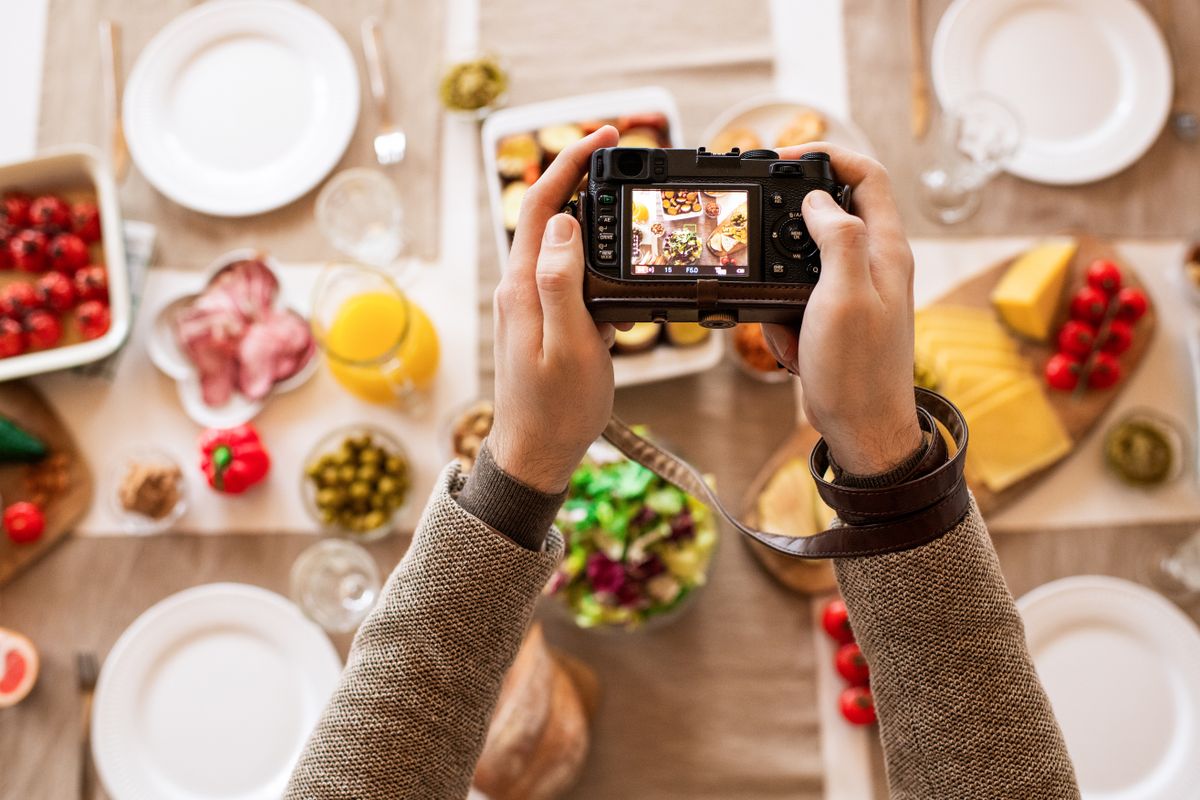
Have photos ready. This is the most common reason a piece dies. Journalists need images, and a small outlet may not have a photographer to send. Keep a folder of good, high-resolution shots — your dishes, your room, you and your team — and offer them upfront. Your own phone photos can be good enough if you shoot them properly.
Respond immediately. A reply the same day can be the difference between being in this week’s piece and not existing. Journalists work to deadlines that are usually hours, not weeks.
Follow up once. One polite nudge a week later, then leave it. Persistence past that costs you the relationship.
Bloggers and local creators are a different game
The people posting about food in your city aren’t journalists and shouldn’t be treated like them. It’s more personal and much less formal.
Follow them first and engage genuinely for a while before you ask for anything. When you do reach out, be direct and human — invite them in, tell them what you’d love them to try. Be clear about the arrangement: is the meal on you, is it paid, is it a straight invitation with no obligation? Ambiguity is what makes these go wrong. And then let them work; dictating the caption is the fastest way to get a flat, obviously-sponsored post that convinces nobody.
Two things to keep in mind. Pick people whose audience is actually near you — 2,000 local followers beat 50,000 scattered across the country. And a reasonable number of small local creators will do more for you than one big name, because they read as recommendations rather than advertising.
Be the easiest restaurant in town to write about
Once someone decides to feature you, the last thing you want is friction. Half the time coverage stalls because a writer couldn’t find a basic fact and moved on to an easier subject.
Have a simple press section or page on your website: a paragraph about the restaurant, your address and hours, a few downloadable photos, and a contact who answers. Keep your website and menu current, because the first thing a journalist does is look you up — and a menu with old prices or a dead page is an instant signal that the information they’d publish might be wrong too. This is the same reason your website’s first impression matters so much for guests.
Make yourself easy to write about
A Lekro website gives journalists what they need in one place — your story, your current menu, your hours, and photos — so coverage never stalls on a missing detail. Start free.
Then squeeze every drop out of it
Getting the piece is half the value. Most restaurants let it disappear the week it runs.
Share it everywhere — social, your email list, your stories. Put a “As featured in…” line on your website. Print it and put it near the door; people genuinely read it while they wait. Keep a link to it forever, because a good article keeps working in search results for years.
And stay in touch with whoever wrote it. A journalist who’s covered you once and had a smooth experience is far more likely to come back to you the next time they need a quote about restaurants in your city. Two or three of those relationships is effectively a free, permanent PR channel.
Start this week
Write down the three most interesting true things about your restaurant. Make a list of ten local writers and creators who cover your area. Pick the one story that’s most timely right now and send four sentences to five of them.
Most will ignore you. One might not. And one article, in the right local outlet, will do more for the next three months than the same money spent on ads — because it comes with something you can’t buy: somebody else saying it.
Tags