
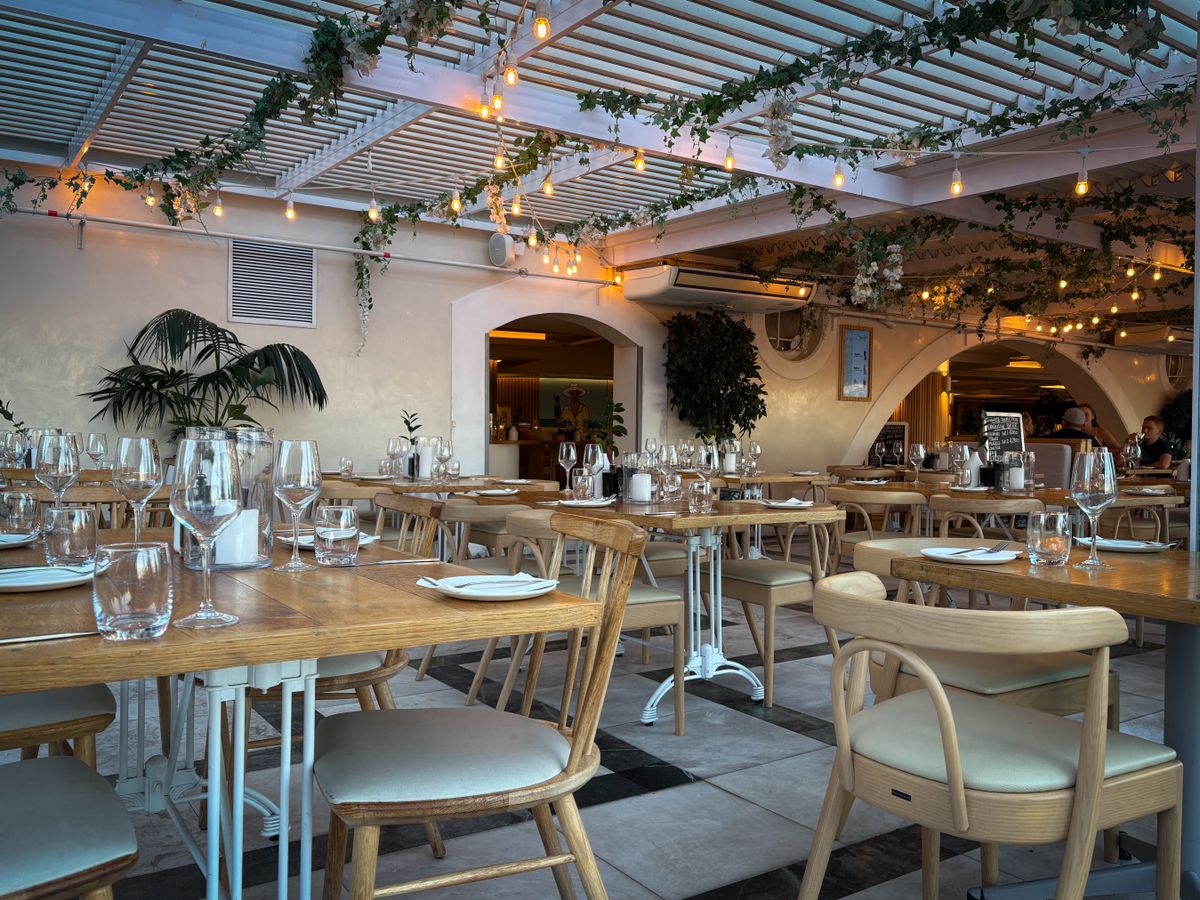
Lighting, Music, Noise: The Part of the Meal Nobody Mentions
Guests rarely say 'the lighting was wrong' — they say they didn't enjoy it. Here's how light, sound, and noise quietly decide what people think of your food, and what to fix first.
Lighting, Music, Noise: The Part of the Meal Nobody Mentions
Read enough of your own reviews and you’ll notice a strange category: the ones where nothing was wrong. The food was fine. Service was fine. Three stars. “It was okay, we probably wouldn’t go back.”
Those reviews are maddening because there’s nothing to fix. But there usually is something — it just isn’t the food. It’s the room. Harsh overhead light that made everyone look tired. A playlist that jumped from a ballad to something aggressive halfway through the starter. A noise level that meant a table of four had to shout across a metre of table for ninety minutes.
Nobody writes “the lighting was 4000 Kelvin and it ruined my evening.” They write “it was okay.” Ambiance is invisible when it works and blamed on something else when it doesn’t. Which makes it one of the biggest levers you have, and one of the cheapest to pull.
Lighting does more than let people see
Light sets the emotional temperature of a room before anyone tastes anything. Get it wrong and you’re fighting your own food all night.
Two things matter more than fixture brands. The first is colour temperature. Warm light — roughly 2200K to 3000K — flatters skin, makes wood and brick look rich, and makes food look cooked. Cool white or daylight bulbs, the ones that look slightly blue, make a dining room feel like a pharmacy and make meat look grey. If your room feels clinical and you can’t explain why, walk in and look at the bulbs. It’s usually the bulbs.
The second is where the light lands. A grid of ceiling downlights washing everything evenly is the single most common lighting mistake in independent restaurants. Even light is flat light; it kills atmosphere and it makes every table feel equally exposed. What you want is contrast: brighter on the tables and the food, darker in the walkways and on the walls. Pools of light with shadow between them make a room feel intimate even when it’s full and loud. That’s why pendants over tables and small table lamps work so well — they light what matters and let the rest fall away.
Two practical notes. Dimmers pay for themselves, because the light that works for a 1pm lunch is glaring at 9pm — you need a different room at different hours, and a dimmer gives you that for the price of a switch. And don’t blind people: bare bulbs at eye level or a spot aimed at a guest’s face is a small torture nobody complains about but everybody feels.
Here’s a test that costs nothing. Sit at every table in your restaurant at your busiest evening hour. Not stand — sit, where the guest sits. You’ll find the table under the harsh spot, the one that’s practically dark, and the one that gets the kitchen door light every time it swings. Then look at the food in front of you. If your dishes look better in your photos than they do on the table, your lighting is undercutting your kitchen.
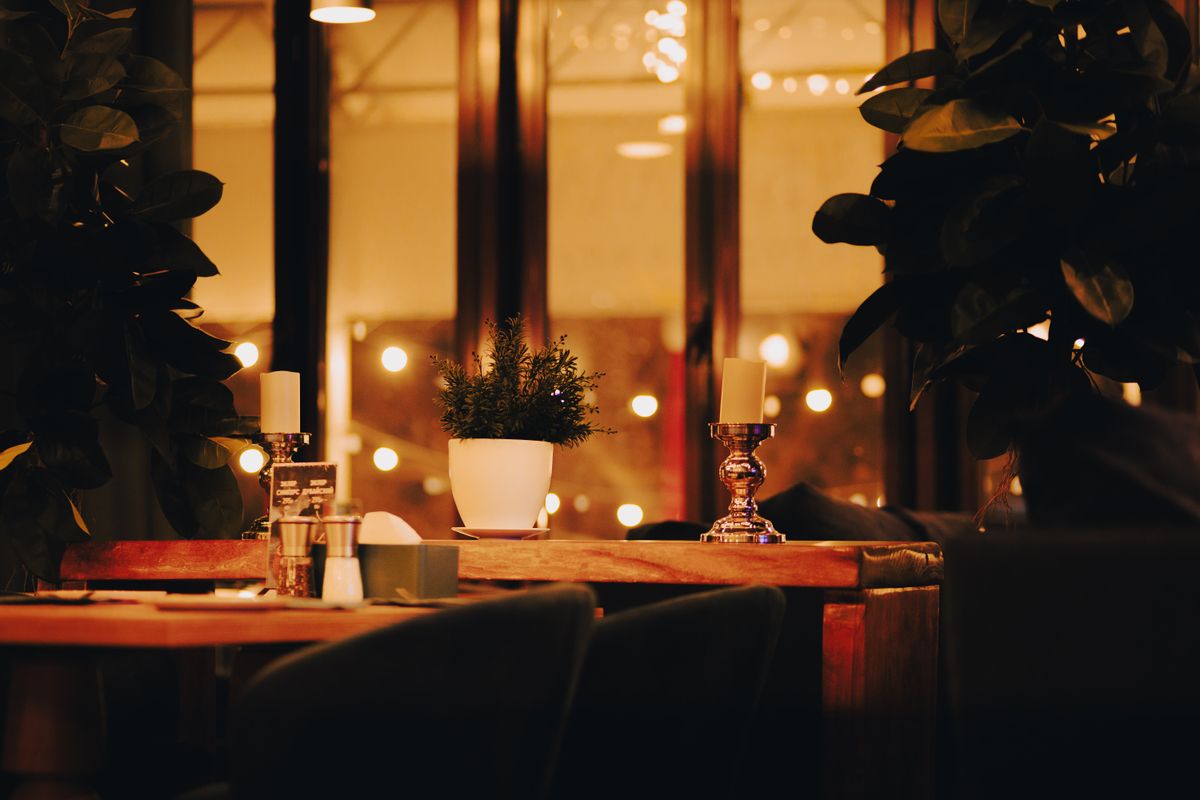
Music is a signal, not a background
Music tells people what kind of place they’re in and how long they’re meant to stay, usually before they’ve read the menu. And most restaurants treat it as an afterthought — whatever someone’s phone is playing, or a generic playlist that lurches between moods.
Match the music to the hour, not to your own taste. Morning wants low and calm. Lunch can be a little brighter and quicker; people are on a clock. Dinner should drop and warm, tempo down as the evening goes on. Late night can lift again. If you run one playlist from open to close, you’re forcing a 1pm mood on a 9pm guest.
Volume is where it goes wrong most often. The rule of thumb worth keeping: guests should be able to talk without adjusting how they speak. If people at a two-top lean in or raise their voices, it’s too loud. If a nervous first-date table can hear the couple beside them clearly, it’s too quiet — a little sound cover is a kindness. Staff acclimatise to volume over a shift and will keep nudging it up; that’s why one person should own the volume and check it during service, not just at open.
And it should be your music. Lyrics-heavy, mid-tempo pop is the beige carpet of restaurant sound: nobody hates it, nobody remembers it. If your place has any point of view at all, the playlist is a free way to express it — and it’s the difference between a room people describe as “nice” and one they describe as “that place with the great vibe.”
Two things worth checking: your speakers and your licence. A playlist is only as good as the system playing it, and a single tinny speaker over the bar will make even great music grating. Music licensing rules vary by country — check what applies where you are, because it’s a boring bill that’s much cheaper than the letter you get for ignoring it.
Noise is the one guests actually complain about
Lighting and music are choices. Noise is mostly physics, and it’s the ambiance problem people do mention out loud — because it’s the one that stops them talking to the person across the table.
Modern rooms are loud by design: hard floors, bare walls, big glass, exposed ceilings, no tablecloths. Every one of those surfaces bounces sound instead of absorbing it. Add a full room and you get the effect where everyone raises their voice to be heard, which raises the ambient level, which makes everyone raise their voice again. By 9pm your dining room is a wall of sound and your guests are exhausted without knowing why.
You don’t need an acoustic consultant to improve it. Soft surfaces are the whole game: fabric on chairs or banquettes, curtains, rugs where practical, acoustic panels or fabric-backed art on the biggest bare wall, plants in corners, tablecloths or fabric runners. Ceilings do a lot of the work, so if you can treat one surface, look up. Then think about layout — group tables away from the hardest reflective areas, and put a physical break between the bar crowd and the dining tables. And control the sources you can: a door that bangs, a coffee grinder next to a two-top, a dishwasher rack being emptied during service. Those are habits and placement, not renovations.
If you want a number to work with, use your phone. A free sound-level app during your busiest service will tell you roughly where you sit. Comfortable conversational dining lands somewhere in the 60s of decibels; when you’re pushing past the mid-70s consistently, people are working to talk, and however good the food is, they’ll leave tired. Tired guests don’t order dessert, and they don’t come back.
It works when nobody notices it
The goal of ambiance isn’t for guests to admire it. It’s for them to relax without knowing why, stay a little longer, order the extra coffee, and leave saying “that was lovely” without being able to point at a single reason. The lighting, the music, and the sound level are doing that quietly, all night, on every table.
Make the online experience match the room
A warm room deserves a website and menu that feel like the same place. Lekro gives you a branded restaurant website and digital menu that carry your atmosphere online. Start free.
Start with one hour and one wall
Do the sitting test tonight: every table, guest’s eye level, at your busiest hour. Swap any cool-white bulbs for warm ones and put a dimmer on the main circuit — that’s a small spend that changes the room more than anything else on this list. Build two playlists, one for day and one for evening, and give one person responsibility for volume during service. Then find your biggest bare hard surface and soften it.
None of that is a renovation. It’s an afternoon of work and a small bill, and it changes what your food tastes like — because what people think of a meal has never been decided by the plate alone.
Tags